

The Perfect Living Room Layout
The Perfect Living Room Layout
The way a space is laid out is, to us, the foundation of everything that follows. Spatial planning is always one of our very first steps, long before materials or colours are introduced. It is about understanding the room in its entirety, how natural light moves through it, how one area connects to the next, and how the space will ultimately be lived in. Particularly in open floor plans, this becomes even more essential. Without clear structure, a space can easily feel undefined. With thoughtful planning, however, and the careful placement of furniture, it is possible to create distinct zones within one larger environment, each with its own purpose, yet all flowing seamlessly together in harmony.
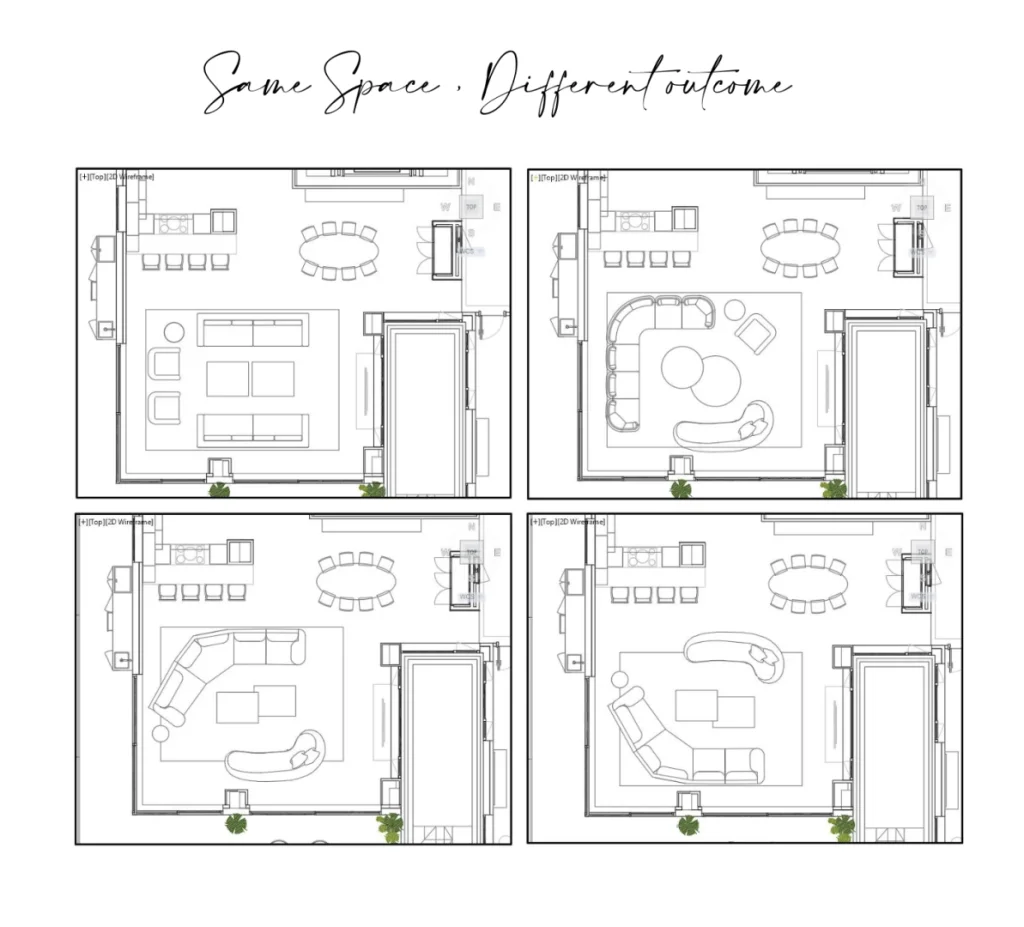
The Importance of Movement
A well designed layout should feel effortless to move through, intuitive and almost unnoticed. There is a natural rhythm to how we navigate a space, and furniture placement plays a crucial role in supporting that flow. One of the most common mistakes we see is the tendency to choose furniture that is too small, often in an attempt to make a room feel larger. In reality, the opposite is often true. Generously scaled pieces can ground a space, giving it presence and cohesion. This is especially true for rugs, which should always extend fully beneath a seating area rather than sit only beneath a coffee table. When proportions are considered carefully, larger elements can enhance the sense of openness, creating a space that feels both expansive and intentional.
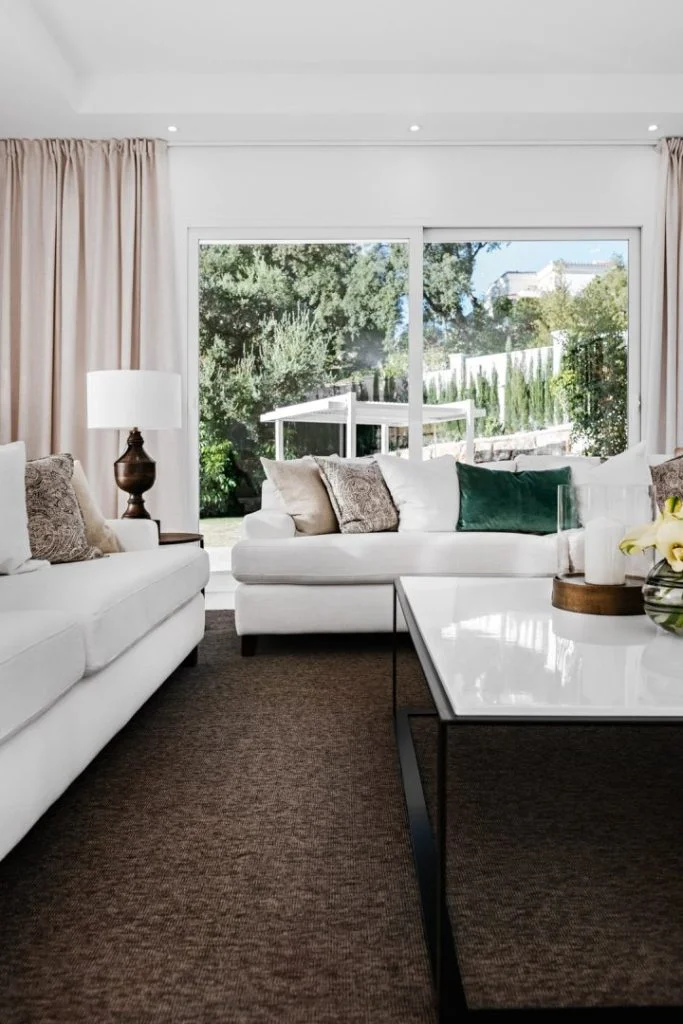
Functionality
Beyond aesthetics, a layout must first and foremost respond to how a space will be used. A formal seating area requires a very different approach than a relaxed living room, and while many layouts may appear beautiful, their success ultimately lies in how well they support everyday living. We consider a range of needs, accommodating different ages, preferences, and moments. An older guest may appreciate a higher, firmer seat with armrests, while a family that gathers to watch films may prioritise a generous sofa or chaise lounge above all else. Even in more compact spaces, we often introduce smaller, movable tables that can be easily repositioned for a cup of tea or a drink. In more formal settings, a more upright seating position is preferred, often paired with more defined, separate seating options to allow for both conversation and a sense of privacy. We also tend to favour parallel seating arrangements, as they encourage balanced social interaction.
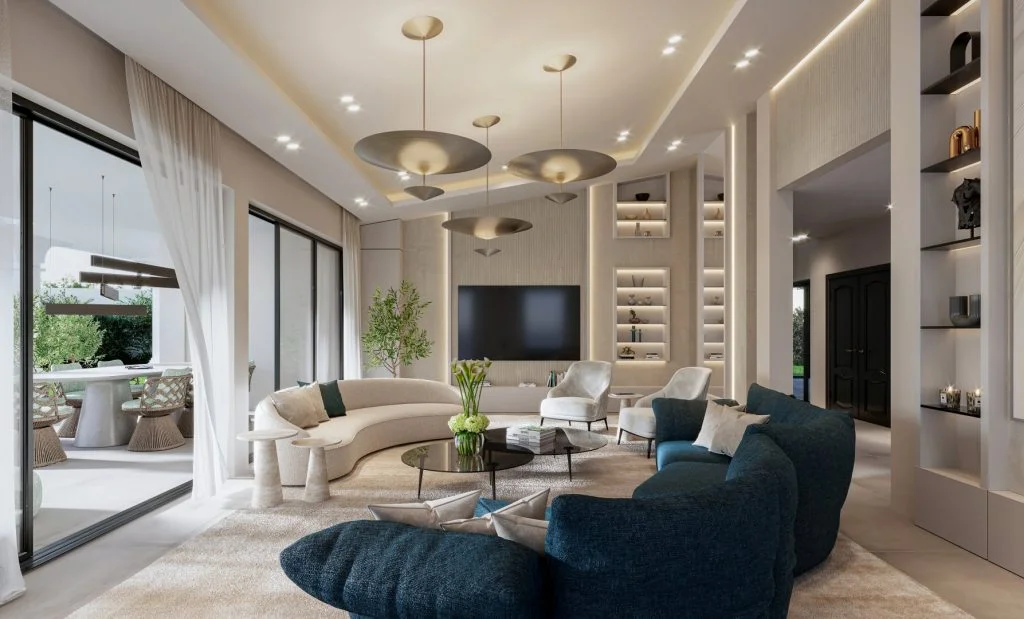
Layering and Composition
The final layer lies in how furniture pieces come together, not just in placement, but in shape, texture, and character. A considered mix is always more compelling than a perfectly matched set. We like to balance pieces that feel lighter, perhaps elevated on legs, with those that are more grounded and substantial. Each element should feel intentional, contributing to the overall composition of the room. Accessibility is equally important, there should always be a surface within reach of most seating areas, reinforcing both comfort and practicality. We often work with two coffee tables of varying shapes, scaled as generously as the space allows, paired with side tables that act as both functional pieces and subtle accents. It is this layering, thoughtful, restrained, yet expressive, that ultimately gives a room its depth and lasting appeal.


